

Life Beneath the Waves: Marine Biology and Ecology in Rockport, Massachusetts
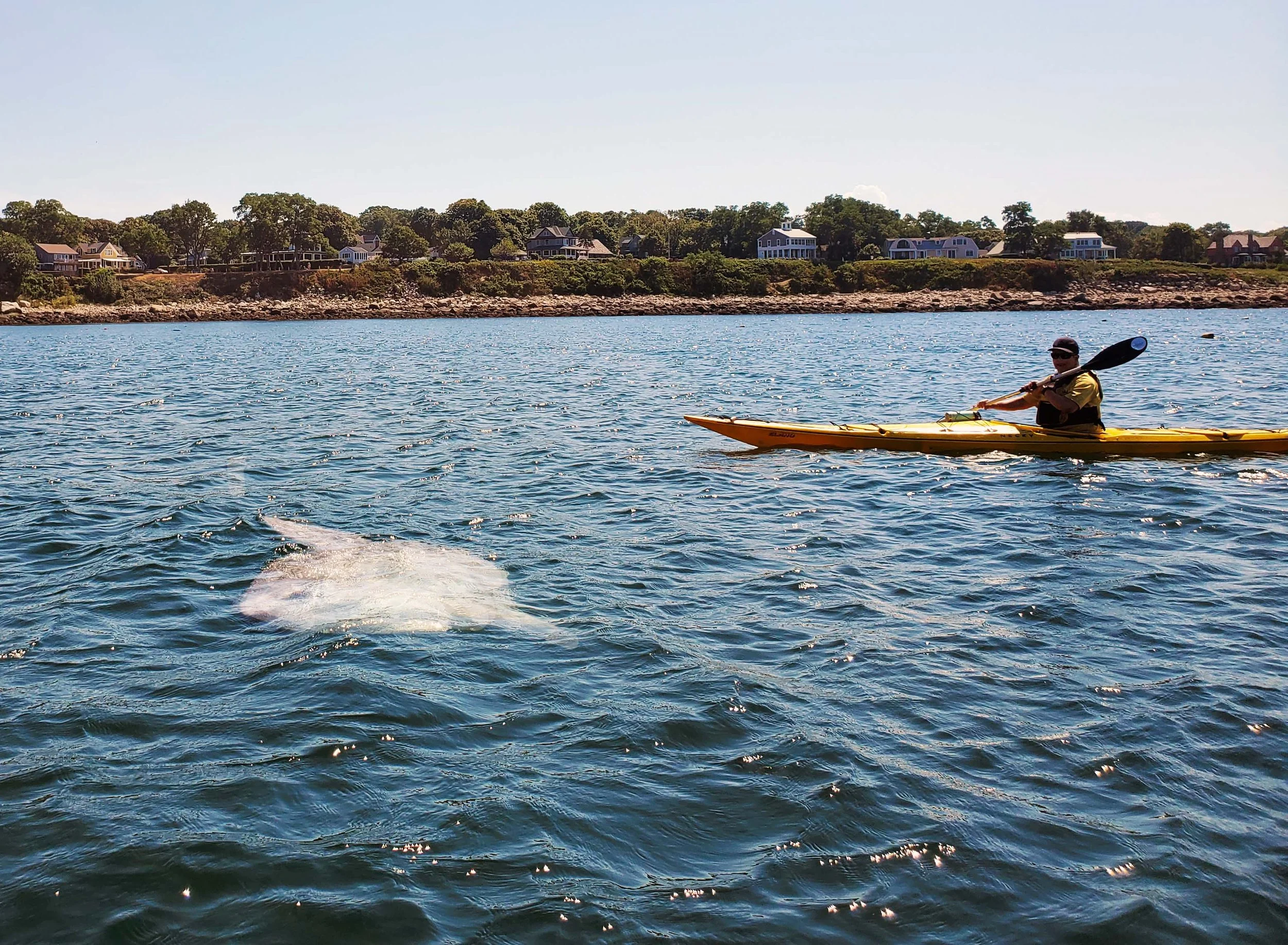
Ocean Sunfish (Mola mola) usually seen in August in Rockport
Tucked along Cape Ann’s rugged coastline, Rockport, Massachusetts is best known for its postcard-perfect harbor, granite quarries, and the iconic Motif No. 1. But just beyond the rocky shoreline lies a thriving underwater world that makes Rockport a quiet gem for marine biology lovers, and SCUBA divers.
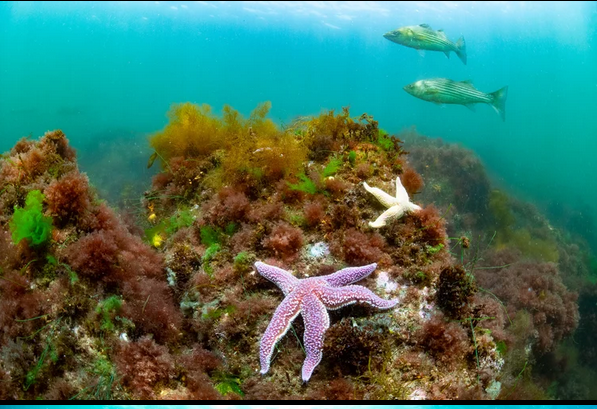
Sea stars and Striped Bass
A Coastline Built for Biodiversity
Rockport’s shoreline is anything but smooth. Jagged granite ledges, sheltered coves, and wave-washed tide pools create a patchwork of habitats where marine life flourishes. This varied terrain, combined with cold, nutrient-rich waters from the Gulf of Maine, supports an impressive range of species—from microscopic plankton to curious harbor seals.
The rocky intertidal zone is especially alive. At low tide, pools reveal sea stars clinging to stone, hermit crabs shuffling along the bottom, periwinkle snails grazing on algae, and small anemones waiting patiently for the water to return. These tide pools are natural laboratories, showing how organisms adapt to extreme changes in temperature, salinity, and wave action.
Kelp Forests and Coastal Food Webs
Just offshore, kelp beds sway with the currents, forming underwater forests that rival coral reefs in ecological importance. These kelp communities provide shelter and food for juvenile fish, crustaceans, and invertebrates. Cod, pollock, flounder, and lobster all depend on these habitats at different stages of their lives.
At the base of it all are phytoplankton—tiny photosynthetic organisms that fuel the entire food web. Seasonal plankton blooms in Cape Ann waters help sustain everything from zooplankton to seabirds and marine mammals.
Lobsters, Seals, and Seasonal Visitors
Rockport sits squarely in lobster country, and the American lobster is one of the region’s most iconic species. Living among rocks and crevices, lobsters play a vital role as both predator and prey, shaping the balance of the seafloor ecosystem.
Grey, and occasionally Harbor seals are also regular visitors, often spotted lounging on offshore rocks or popping their heads above the surface near the harbor. Depending on the season, you might also encounter migrating dolphins, whales, Ocean Sunfish (Mola Molas), seabirds diving for fish, and schools of baitfish moving along the coast.
Science, Stewardship, and Education
Marine biology in Rockport isn’t just something to observe—it’s something the community actively protects. The area benefits from conservation efforts, sustainable fishing practices, and regional research initiatives tied to Cape Ann and the greater Gulf of Maine. Nearby marine science institutions and coastal monitoring programs study climate change, ocean warming, and shifting species distributions, all of which are increasingly visible in these waters. We at North Shore Adventures help in this effort by assisting in tagging Horseshoe crabs, rescuing Marine Drifters, and cleaning literal tons of trash!
Local tide pool programs, nature walks, and informal citizen science projects help connect residents and visitors to the ocean, fostering a sense of stewardship for this fragile environment.
Why Rockport Matters
Rockport may be small, but its marine ecosystems tell a big story about life in the North Atlantic. From resilient tide-pool creatures to complex offshore food webs, the town’s coastal waters offer a vivid example of how geology, climate, and biology intertwine.
Next time you walk along Bearskin Neck or gaze out from Halibut Point, it’s worth remembering: beneath the surface, an entire world is busy thriving, adapting, and reminding us just how alive the ocean really is.